Sanctuary


Sanctuary

Sanctuary

Welcome to a space where well being begins from within.

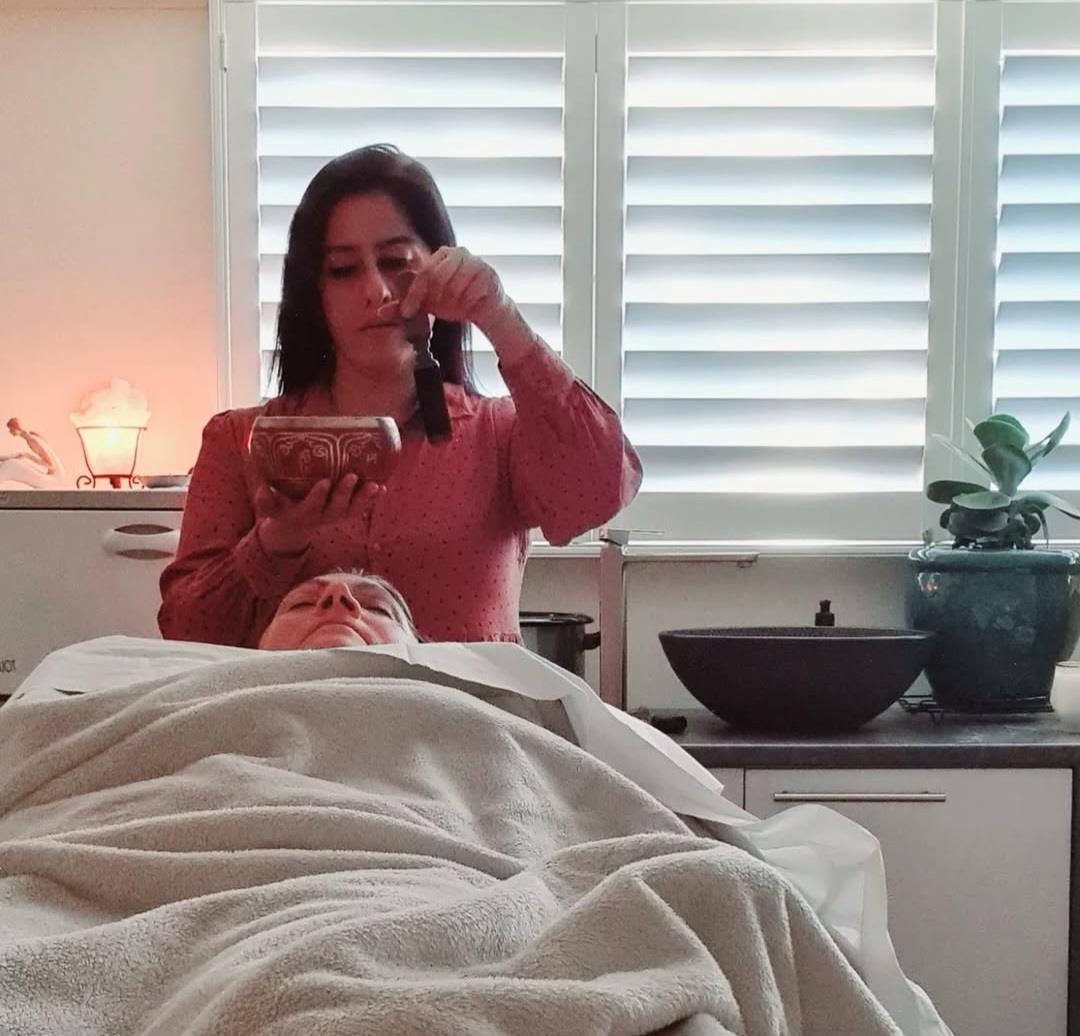
Sanctuary is my happy place, where I blend Ayurvedic wisdom with the science of nervous system, hand crafted oil formulations and the power of mindful touch. This alchemy activates self-regeneration, deep well being and a timeless, feminine glow from within.

My deep understanding of holistic skin care, Ayurveda (an ancient system of natural healing), alternative therapies (reflexology, aromatherapy) paired with my passion for physical fitness (exercise, nutrition) and mental fitness (meditation, breathing exercises) has broadened my comprehension of the human body. This unique combination allows me to explore the energetics of movement, blending the mind-body connection with the fluidity of improvisational flow in my treatments. If you are keen to learn more about the ancient sciences keep scrolling down to walk the ayurvedic path with me.

My bodywork session are, holistic wellness rituals, designed to restore balance and equanimity to both the mind and body. My offerings are the product of years of study, self-reflection, and continuous exploration into the art of healing, reflecting my commitment to offer a deeply personalized and restorative experience for each client.

Known for my exceptional standards of care and calm, I have earned the trust and respect of a loyal clientele. My clients appreciate my ability to listen deeply, guiding them on a journey toward relaxation, renewal, and vitality. With my clients, I am celebrated for my gentle yet powerful approach, creating a nurturing space where my clients can unwind, rejuvenate, and feel truly cared for.

My commitment to professionalism and excellence ensures that each session is a luxurious wellness experience. My practice thrives on the values of integrity, discretion, and respect, qualities that my clients hold in the highest regard. Through this unwavering dedication, I have fostered a trusted environment where the physical, mental, and emotional well-being of every individual is my top priority.

Browse the service menu on the sidebar to find the experience that speaks to you. Please note: Sessions are available by online reservation only.
Let's walk together towards a holistic journey

--------------------------------------------------------------------------------------------------------
IMPORTANT!
Before you book : Health Guidelines and policies.
Clients are required to inform me of any medical conditions, changes in lifestyle that may affect skin sensitivity or condition and allergies prior to every treatment.

Why This Matters -
I take your health seriously and committed to provide a safe, hygienic and healing space for every guest. Arriving with an active illness or infection may put yourself and your therapist at risk, and may interfere with your body's natural healing response. If I feel under the weather, I call my clients keeping in mind about their good health and my best interest, and inform them to ask if they can reschedule. When I do this they are thankful to me profusely for giving them the option to reschedule.
I expect the same from my clients in case they are unwell.

Liability : Core allure is not liable for any adverse reactions or injuries resulting from treatments when clients have not disclosed relevant health information. Clients assume all risks associated with treatments and use of products. Core allure reserves the right to refuse service for inappropriate behaviour or if a treatment is deemed unsuitable for your health and safety.

Privacy : I respect your privacy and am committed to protecting your personal information. Any data collected during your visit will be used solely for the purpose of providing services and improving client experiences unless discussed with clients and all relevant media release forms are signed.

Cancellation policy: If you are unwell, please look after yourself and please stay at home. Do though respect your therapist and your appointment. Notify me, I do require at least 12 hours notice or before 9am for same day cancellations. This should give you plenty of time to realise you are unwell enough not to be able to come in. Deposit paid towards your appointment is non refundable and adjusted to your future appointments. Deposit is refundable only for exceptional circumstances or a genuine emergency at my discretion. I value your time and appreciate your respect for mine. By adhering to my cancellation policy, you help me provide the best service possible to all my clients.

KINDLY don't come for treatment when sick!
Why?
Cause -
You may spread the bug in treatment room for other people to suffer. It could be spread to the therapist hurting their ability to work and the business as whole.
Getting a hands-on therapy, while sick spread the virus into a person's own circulatory system and make their own situation worse.
Some sickness compromise the immune system. it overloads the immune system and can cause a major histamine reaction or massive flare up increasing inflammation.

Please don't be offended if I am very direct in health and safety issues (cold, flu or anything contagious), refusing the treatment or requesting to reschedule.

Right to cancel: Core allure reserves the right to cancel appointments at any time when it is deemed not safe to perform the treatment. This includes (but not limited to) situations involving client illness or unappropriate client conduct

Medical contraindications -
For your safety, if you are experiencing any health concerns or conditions, please take a moment to read the following important information before booking.

Some health conditions require extra care, adaptation or medical clearance from your health provider, before I proceed with treatment.
WHY?
~ Some therapies could interfere with medical treatments.
~ Certain areas of the body might be sensitive or healing from surgery or radiation.
~ The immune system could be compromised, increasing risk of delayed recovery.
~ It's important to ensure that any bodywork or healing supports your medical care, not conflict with it.
~ Personalized guidance from your healthcare provider helps create a safe and beneficial experience.

My goal is always your comfort and safety, so I ask that you let me know if any of the following apply before you come for treatment:
~ Heart conditions (e.g. high/low BP, history of heart attack or stroke)
~ Diabetes, especially with poor circulation or nerve sensitivity.
~ Epilepsy or seizure disorders
~ Pregnancy
~ Cancer, whether currently undergoing treatment or in recovery
~ Recent surgeries, fractures or acute injuries (within last 6 months)
~ Autoimmune conditions (e.g. lupus, rheumatoid arthritis during flare-ups)
~ Respiratory conditions (e.g. uncontrolled asthma, COPD)
~ Kidney or liver disorders
~ Skin conditions such as eczema, psoriasis or dermatitis (if inflamed or sensitive)
~ Varicose veins, thrombosis or blood clot history
~ Any kind of allergies
~ Sensitive scalp
~ Swollen lymph nodes or unexplained swelling or inflammation
~ recent surgery
~ Neck, spinal or shoulder injuries

NOTE:
Many clients with these conditions come for relaxation, stress relief and gentle therapies, which can be very beneficial. However, treatments may need to be adapted or focused on specific areas, and in some cases, I may ask for medical clearance.

What you can do:
~ Let me know at booking
~ Feel free to discuss with your GP or specialist beforehand
~ If unsure then simply ask me before booking, your wellbeing is my top priority and for doing your part I will be thankful to you for your trust and transparency.

TOTAL CONTRAINDICATIONS : When I cannot offer treatment.

For your safety and for the best interest of your therapist, I kindly ask you not to book or attend an appointment if you are experiencing any of the following total Contraindications. Seek medical care, rest well. Wait until you are fully recovered and symptom free.
~ A fever
~ Contagious illnesses such as cold, flu, COVID, strep throat or norovirus, stomach bug
~ Infectious skin or eye conditions such as impetigo, conjunctivitis, ringworm scabies or lice and scalp infections, open wounds, cuts, sores
~ Vomiting or diarrhoea
~ Use of alcohol or recreational drugs prior to your appointment
~ Severe untreated medical conditions or acute pain, whiplash,recent concussions
~ Kidney infections or UTI with fever or other systemic symptoms
~ Fungal nail infections, Verrucae, open cuts, bleeding skin

If you are uncertain whether your condition is suitable for treatment, I recommend contacting your GP or directly asking me prior to booking. I appreciate your honesty in sharing any relevant health information for making it possible for me to provide you with a relaxing experience, delivered with care, professionalism, and respect.

Thank you for your cooperation in maintaining a safe and healthy environment.

--------------------------------------------------------------------------------------------------------

Got few quiet moments? Make a cup of tea and scroll through.
In a world full of tabs, I have created something different, a quiet space you could scroll through slowly. Everything you need is right here - simple, intentional and held in one place.

As you scroll, you will find this space is filled with reflections,(I update these reflections over time, as inspiration flows and creativity allows), rituals, Ayurveda and reminders - gathered from my roots, my hands and the quite lessons of everyday life.
Scroll slowly, trust your eyes to land where they are meant to. May be one piece will feel like a little whisper made just for you. You might find exactly what your heart needs today.

____________________________________________________________________________________


REFLECTION 1
Ayurveda

If you feel called to explore the wisdom of Ayurveda, stay with me - the path continues just below. Ayurveda is more than a wellness system - it is a way of life. If your heart is open to learning, scroll down and explore the essence of this timeless science

Disclaimer - I am not a vedic practitioner. Any information I post in my social media or share with my clients as a holistic therapist is based on the tried and tested vedic traditions passed to me through generations, wisdom gained from vedic teachers and endless sessions of reading and practicing this ancient science in my daily life.

The following parts about Ayurveda are about my ayurvedic understanding.

Part 1
HISTORY OF AYURVEDA -
How did it all start? The answer is not as straightforward. Like Greek mythology, the roots of Ayurveda are divine - with gods, sages and cosmic stories guiding its timeless wisdom. But Ayurveda ia more than just mythology. It is a holistic science grounded in the rhythms of nature, the body, and the mind. It continues to guide how we eat, sleep, think and heal.

Traditions narrated that the origin of Ayurveda is stated to be the divine revelation of Lord Brahma (Indian God of creation), to his son Daksha Prajapati, onto the Ashwin twins (The Divine Doctors), then passed to Lord Indra. Sage Bharadvaja volunteered to go to heaven to receive this wisdom from Indra and so became the first human to receive the knowledge of Ayurveda. He passed it to sage Atreya, then onto Punarnavasu and finally Agnivesha - who described it in text form in his book - Agnivesha Tantra.

It was revised by Rishi Charka in Charka Samhita. Another text of Ayurveda is the Sushruta Samhita, which was compiled by Sushruta, the primary pupil of divine physician Dhanvantri. Sushruta is known as the father of surgery so he compiled the teachings of his master with additional findings and observations ranging from obstetrics, orthopedics to opthamology.

So both Chakra Samhita (120 chapters/8 parts) and Sushruta Samhita (6 sections) are based on a holistic approach rooted in vedic culture, served as the textual material within the ancient universities (Gurukul) of Takshashila and Nalanda.

Part 2
University (Gurukul) system (residential monasteries) :
Education system in ancient India with students living near or with Guru (teacher) in the ashram - a very sacred Guru - Disciple system.

All the students irrespective of their social standings were considered equal. They learned from the Guru and helped him in everyday chores as well - which included self discipline. While living in gurukul, students would be disconnected from their families completely. The system of Ayurvedic medicine and other subjects got transferred through written scripts and shalokas. Students were directed to a life of chastity, honesty and vegetarianism and would strive with all their being to heal the sick. They never betrayed patients for their own advantage. They had to be modest, courteous and measured in speech all the time.

Core subjects in Gurukul alongside Ayurveda;
1) Vedas and Scriptures - Purpose was spiritual knowledge, rituals and philosophy.
Rigveda, Samaveda, Yajurveda, Atharvaveda
Upanishads, Brahmanas, Aranyakas

2) Vedanga (Six limbs of the vedas) -
Shiksha (Phonetics and pronunciation)
Vyakarana (Grammer)
Chandas (Poetics and meters)
Nirukta (Etymology and word meanings)
Kalpa (Ritual instructions)
Jyotisha (Astronomy and astrology)

3) Ayurveda
The science of life, health and healing - diagnosis, herbs, diet, surgery, preventive care.

4) Dhanurveda
The science of warfare and archery - physical training, martial arts, weaponry.

5) Arthashastra
Economics, statecraft and governance.

6) Sthapatya Veda / Vastu Shastra
Architecture and design principles (related to space, harmony and energy)

7) Music and Arts
Classical music based on Samveda, dance, sculpture and painting.

8) Yoga and Meditation
Physical postures, breath control (Pranayama) and meditative disciplines.

9) Mathematics
Arithmetic, algebra, geometry and early forms of calculus.

10) Logic and debate
Critical thinking, reasoning and philosophical inquiry.

Education in Gurukul was Spiritual and ethical. Character building was as important as academic mastery. At the end of one's education, students offer the Guru, Guru-Dakshina before leaving the gurukul to acknowledge respect and give thanks to the Guru - which may be monetary, but may also be a special task the teacher wanted the student to accomplish.

The normal length of training appeared to be 7 years and after that they would continue to learn through texts, observation and attending meetings, where knowledge was exchanged.

Part 3
What is health in Ayurveda?
Health is a state of body and mind where three doshas - Vata, Pitta and Kapha - are in a balanced state, there is a balanced energy system in digestion and elsewhere in the body, there is a balanced development of all the seven dhatus (Rasa, Rakta, Mansa, Majja, Shukra and Ojas) and proper excretion at appropriate times, and where sense organs, the mind and the soul have a sense of happiness and satiation.

Mental health is based on three factors - Satva, Rajas, and Tamas, where the satvic state of mind is considered best and tamsic state is full of dullness and highly disturbed.

The three basic principles of health are Ahar (Food), Achar ( Disciplined life) and Vihar (The moderate interactions with the environment).

1) Ahar : Food should be balanced in nutrition, satvic - consisting of whole grains and fruits/vegetables, tasty with some spices/herbs and in accordance to senses and in moderate quantities.
2) Achar : The entire conduct of human beings in daily life must be disciplined and regulated according to the natural laws.
3) Vihar : It refers to the interactions with the surroundings constituted of human society, animal world, air, water, earth and plant life. These must be respected and in no case be abused. Excessive use would have fatal consequences.

According to Ayurveda a state of Health exists when these factors are in balance.

Part 4
As I deepened my understanding of Ayurveda, I came across a concept that completely shifted how I view the body. Much of what we understand today about tissues and body systems comes from modern medical science. Yet, what's truly awe-inspiring is that ancient Ayurvedic scholars recognized these same layers of the human body thousand of years ago.
Have you ever wondered what truly sustains and structures the human body - not just physically, but energetically and emotionally as well. In Ayurveda, the body is not simply made of cells and organs. It is seen as a living, breathing system made of seven vital tissues, each with a unique role in maintaining health and balance.

Sapta Dhatu
Sapta means 7 and Dhatu refers to various type of tissues human body is made of. Dhatu in Sanskrit means - that which forms the body.
Here is a brief look at each of the Sapta Dhatus -

1) Rasa - Plasma and Lymph
The food we eat is first digested in the stomach and small intestine, forming a semi-fluid essence. This is absorbed in bloodstream and becomes Rasa, the nourishing fluid that forms plasma and lymph. it is responsible for hydration, nutrition and the flow of life energy throughout the body.
2) Rakta - means blood. It carries oxygen and vital nutrients to all tissues, playing a key role in circulation, vitality and life force. it is also linked to complexion and emotional energy in Ayurveda.
3) Mamsa - refers to muscle - the tissue responsible for movement, posture and physical strength. Ayurveda recognizes three types:
Skeletal - Voluntary, control movement of joints.
Smooth - Involuntary, found in organs like intestines.
Cardiac - Found only in heart, pumping blood continuously.
4) Medas - is fat tissue. It provides lubrication, insulation and warmth and serves as a reserve of energy. In balance it supports flexibility and stamina; in excess, it can lead to heaviness and stagnation.
5) Asthi - refers to bones and cartilage, which give structure, support and protection to the body. Healthy bones are crucial for posture, movement and organ safety.
6) Majja - is the soft tissue inside the bones - bone marrow - as well as the nervous system. It plays a key role in immunity, mental clarity and coordination.
7) Shukra - governs the reproductive system and is responsible for creation, regeneration and vitality. A portion of Shukra transforms into Ojas - the finest byproduct of digestion and tissue formation. Ojas represents immunity, strength and the integration of body mind and spirit.

In ayurvedic understanding, each Dhatu is nourished by the previous one, forming a beautiful chain of transformation - from the food we eat to the essence that sustain our soul.

Part 5
The importance of five elements in Ayurveda.
Pancha Mahabhutas.
Ayurveda teaches that all matter in the universe, including the human body and mind, is composed of five fundamental elements. Understanding their importance helps explain everything from body constitution to mental tendencies and even disease patterns.
1) Akasha - Ether or Space
2) Vayu - Air
3) Agni - Fire
4) Apa - Water
5) Prithvi - Earth
These elements are not just physical substances - they represent energetic principles that influence our body, mind, emotions and environment.

Why the five elements matter in Ayurveda?
1) Health - Health is seen as state of elemental balance. When one or more elements become excessive or deficient (due to diet, lifestyle, environment or emotions), disease can occur.
2) Diagnosis and healing - Ayurvedic practitioner assess which elements are out of balance and use medicinal herbs, foods, routines and therapies to restore harmony - using the opposing qualities of elements to treat.
3) Living in harmony with nature - By understanding the elements, Ayurveda encourages us to live in sync with nature's cycles, seasons and energies - adjusting lifestyle and diet to stay balanced throughout the year.
4) Mind-Body connection - The elements also influence the mind and emotions.
Ether gives spaciousness, but excess leads to disconnection.
Air supports creativity, but imbalance brings anxiety.
Fire fuels willpower and intellect, but excess can cause anger.
Water offers compassion, but can turn to over attachment.
Earth brings grounding, but too much may lead to stagnation.
5) Body constitution (Prakriti) - Each person is born with a unique balance of the five elements, which defines their Doshas.

Part 6
What is a Dosha?
In Ayurveda, Dosha is not a thing- it's a characteristic, tendency or energetic principle that shapes how our body functions, how we react to life, and even how we feel.

The word Dosha literally means - that which can go out of balance. These energies are derived from combinations of the five elements and are present in everyone and everything. Understand and take the quiz in my next blog to know your Ayurveda dosha.

____________________________________________________________________________________

REFLECTION 2
Understanding the tridosha - The three pillars of balance.

According to Ayurveda, our body, mind, emotions, and even the worlds around us, are governed by a mixture of three fundamental energies or forces that we call Doshas.

These Doshas govern all the activities of your mind and body and are called Vata, Pitta and Kapha. Yet, in every person, they will be found in different proportions. In most of us, one or two Doshas tend to dominate.

~ VATA: governs movement within the body. It governs the movement of thoughts in our mind, the movement of air when it is windy and every movement imaginable.
~ PITTA: governs the transformation of food when it is digested and assimilated into the body. The assimilation of new knowledge is governed by Pitta, as is any transformation we see around us.
~ KAPHA: structures our body and gives us our physical strength. It manifests as the relative power of the mind and is the force that holds together each atom and structure we see around us.

Each person has their own mixture of Doshas and the relative proportion of Vata, Pitta, and Kapha we have in our body is what makes us unique. Keeping our unique body-type, or mixture of Doshas, in good balance is the key to good health.

Some people are born with a higher proportion of Vata and, throughout their lives, their bodies will tend to be thinner and lighter. Those with more Kapha, tend to put on weight easily. Those with more Pitta, tend to be hotter and not feel the cold so much.

These differences in the proportions of Vata, Pitta and Kapha are perfectly natural. Ayurveda says that as long as you maintain your own individual body-type balance, you remain healthy.

Personal Ayurveda health evaluation:

Questions to pose before the quiz :

1. Do you embody the dynamic nature of Vata, always in flux?

2. Are you more aligned with the fiery temperament of Pitta?

3. Or do you resonate with the grounded and earthy qualities of Kapha?


Choose answers that most accurately fit your body for most of your life: Many of these responses will not have an exact match.
Just choose the response that fits you the best.

Tally up the number of v’s, p’s, and k’s you receive (standing for vata, pitta, and kapha), whichever you have the most of is your dominant dosha:

1. Physique
v) I am a slender person and I hardly gain weight
p) I am medium build
k) I am well built and I gain weight no matter what I do

2. Skin
v) My skin is dry, thin, and itches often
p) My skin looks flushed; I have lots of moles and freckles on my body
k) My skin is smooth and soft, it looks pale sometimes

3. Hair
v) My hair is dry, thin and brittle
p) My hair is neither dry nor oily (for men: I have a receding hairline)
k) My hair is thick, full, lustrous, and slightly oily

4. Face
v) My face is oval
p) My face is triangular (pointed chin, prominent jaw line)
k) My face is round

5. Eyes
v) My eyes are small; they feel dry often and have a bit of dullness (usually brown)
p) My eyes are medium in shape; sharp & penetrating (usually blue)
k) My eyes are big and round in shape, full eyelashes

6. Hands
v) My hands are generally dry, rough; slender fingers; dry nails
p) My hands are generally moist, pink; medium fingers; soft nails
k) My hands are generally firm, thick; thick fingers; strong & smooth nails

7. Joints
v) My joints are small, prominent bones, and often crack
p) My joints are medium and loose
k) My joints are large, sturdy, with lots of muscle surrounding

8. Activities
v) I am a very active person (always on the go, mind constantly thinking)
p) I like to think before I do anything
k) I am steady and graceful (I don’t like to rush)

9. Actions
v) I walk fast and talk fast
p) My actions are very thoughtful and precise
k) I like a slower pace and I take my time to accomplish things

Sleep
v) I do not sleep soundly at night. I tend to toss and turn. I wake up early in the morning
p) I am a light sleeper but if something wakes me up, I can go back to sleep easily
k) I am a heavy sleeper

11. Appetite
v) Varies, sometimes I feel hungry, sometimes not, I feel anxious if I don’t eat
p) I always feel hungry. If I don’t eat I get irritable and angry
k) I don’t feel very hungry. I can go without food easily for a day

12. Bowel Movement
v) I tend to have constipation and can go a day or two without a bowel movement
p) I am regular and sometimes stools are loose (tend to get diarrhea)
k) I have no problem. I wake up to go to the bathroom.

13.Voice
v) My voice tends to be weak or hoarse
p) I have a strong voice, I may get loud sometimes
k) My voice is deep, has good tone

14. Emotions
v) I am a born worrier, I often feel anxious and nervous
p) If things don’t happen my way, I feel irritable and angry
k) I am a happy person, very caring and loving

15. Weather Preference
v) I love warm and humid weather
p) I enjoy cool weather, I dislike a warm climate
k) I like warm but dry weather

Sweating
v) I sweat little but not much
p) I sweat profusely and it might have an unpleasant odor
k) I never sweat, unless working very hard

17. Memory
v) I remember quickly and forget quickly
p) I remember what I want to remember and never forget
k) It takes me a while to remember, but once I do I never forget

18. Actions
v) I tend to be spontaneous
p) I am a list maker. Unless I plan, I don’t do anything
k) I don’t like to plan, I prefer to follow others

Stamina
v) I like to do things in spurts and I get tired very easily
p) I have medium stamina
k) I can work long hours and maintain good stamina

20. Mind
v) My mind gets restless and racing easily
p) I get impatient easily
k) It takes a lot to make me mad. I usually feel very calm

21. Decision Making
v) I change my mind more often and will take time to make a decision
p) I can make a decision easily and stick with it
k) I want others to make the decisions

22. Personality
v) “Is it too late to change my mind”?
p) “It’s my way or the highway”
k) “Don’t worry, be happy!”

23. Sports
v) I like action
p) I like to win
k) I like to have fun

24. Health Problems
v) My symptoms are mainly pain, constipation, anxiety and depression
p) I often get skin infections, fevers, heart burn, and hypertension
k) I tend to get allergies, congestion, weight gain and digestive problems

25. Hobbies
v) I like art (drawing, painting, dance) and travel
p) I like sports, politics, and things that get my adrenaline pumping
k) I like nature, gardening, reading, and knitting

THERE YOU GO, WELL DONE!
Be sure to save your results and share it with me at your appointment so I can tailor your session to your unique Dosha.

Your Result
Vata:
You're imaginative, quick-thinking, and expressive,
but need grounding and routine. Keep warm and
nourished.

Pitta:
You're driven, focused, and intense. You thrive on
challenge but need cooling, calming practices to
avoid burnout.

Kapha:
You're steady, compassionate, and calm. You bring
peace to others but need stimulation and movement to stay balanced.

Got two dominant doshas in your quiz results? Read my reflection 4 to learn what that means for your body, mind and self-care.

---------------------------------------------------------------------------------------------------------------------------------------------------------------------------------------------------------------- Reflection 3

Humans are being of nature, constructed from the same five elements, and thus can use the opposing elements as needed to bring us back into balance.
It all hinges on knowing your doshas, however. You can get a general sense of where your dosha balance lies, and go from there to correct the problems.

How to balance the doshas?
If a dosha has gone out of balance, i.e. it has been ‘aggravated’ or ‘increased’, it can be brought back into balance using measures that are the opposite of those influences that caused the disturbance.
For example, if Vata has been aggravated by cold weather, then making sure to wear warm clothing and to eat warm food will be balancing.

To help maintain the doshas in lasting balance in the mind and body, Ayurveda recommends:
1. A regular daily routine
2. A healthy diet adjusted for the individual
3. Food supplements to bring balance to specific areas
4. Aroma and music therapy to balance the senses
5. Physical and breathing exercises
6. Transcendental Meditation to give clear awareness, deep rest and mental coordination.


Vata
Elements : Ether + Air
Governs : Movement, communication, circulation, breathing, nerve impulses, elimination
Qualities : Dry, light, cool, fast moving
In balance : Creativity, clarity, flexibility, alertness, imaginative, spontaneous
Out of balance : Anxiety, restless, dryness, constipation, fatigue, insomnia, fearful, overly sensitive, loneliness, indecision

Pitta
Elements : Fire + Water
Governs : Digestion, intelligence, temperature, metabolism
Qualities : Hot, sharp, intense, oily
In balance : Confidence, clarity, good digestion, intelligence, leadership, focused, driven
Out of balance : Irritability, inflammation, acne, heartburn, rashes anger, controlling, judgemental, short temper, overly critical, frustration,

Kapha
Elements : Water + Earth
Governs : Stability, structure, lubrication, immunity, emotional bonding
Qualities : Heavy, cool, moist, slow, dense
In balance : Calm, strength, passion, stable, loving, nurturing, loyal
Out of balance : Lethargy, weight gain, over attachment, depression, congestion, sluggishness, stuck, resistant to change.

We all have all three Doshas within us, but one or sometimes two tends to dominate, shaping our body type, personality and health tendencies. What makes each person unique is the proportion of these three Doshas at the time of birth, known as your natural constitution (Prakriti). One Dosha is usually predominant, while the other two are present in lesser amounts and this combination influences everything from your body shape and digestion to your energy, sleep and emotional tendencies.

For example :
A person with Vata dominance may be light, creative, energetic but when the balance is disturbed they are prone to anxiety or dryness.
A Pitta dominant person may be focused, driven, with strong digestion, but may tend toward anger.
A Kapha dominant person may be calm, grounded, nurturing but can struggle with sluggishness or attachment.

The goal is balance, not elimination. Ayurveda does not aim to remove any Dosha, because each one is essential to our functioning :
Vata drives movement and communication.
Pitta governs transformation and digestion.
Kapha provides structure and stability.

Health in Ayurveda means maintaining the right balance of all three, in harmony with your natural constitution, environment and life stage.

Simple ways to Balance your Dosha:
Vata -
Qualities: Airy, light, creative
When out of balance: Anxious, scattered, cold, overwhelmed.
Needs: Grounding, warmth, stability, rhythm, rest and assurance.
Balance with: Warmth, stability, moisture, routine.
~ Speak slowly and think before reacting.
~ Eat warm, cooked, moist foods (soups, stews, ghee).
~ Avoid cold, raw and dry foods (crackers, cold salads, iced drinks).
~ Follow a consistent daily routine (same sleep/eat times). Vata needs deep, regular sleep.
~ Stay warm and bundled in cold or windy weather.
~ Practice calming yoga (slow stretches), grounding meditation, relaxing massage. walk barefoot, journal.
~ Avoid over committing or multi tasking.
~ Surround yourself with calm, stable, warm, supportive people.
~ Avoid over stimulating environment or people who drain your energy.
~ Cut back on news, social media scrolling - these aggravate Vata's airy jumpy nature.
~ Vata is naturally artistic. Paint, write, dance - but gently. not to impress, but to express.
~ Use warming oils like sesame oil or almond oil for massage.
~ Use creamy hydrating moisturizers.
~ Be gentle with yourself; Vata needs nurturing, not pressure.
Mantra for Vata : I am steady, rooted, and calm. I slow down, I return to the earth, I rest in rhythm.

Pitta -
Qualities: Fiery, Focused, Intense, driven
When out of balance: Irritable, overheated, critical.
Needs: Cooling, softness, compassion, slowing down,moderation, calm and listen to the heart too.
Balance with: Cooling, calming, softening, moderation.
~ Pitta often wants to manage everything, practice saying - it is okay if things are not perfect, progress is peace. Let others help.
~ Eat cooling foods (coconut, cucumber, leafy greens).
~ Avoid spicy,fried, too much fermented or acidic foods.
~ Spend time in nature, specially near water or greenery to calm intensity.
~ Stay cool, avoid excessive heat and sun. Practice moonlight walks.
~ Practice calming yoga, yin/restorative styles, relaxing massage and meditation. Avoid hot yoga.
~ Don't skip meals - eat mindfully.
~ Use cooling oil like coconut or sunflower for massage.
~ Practice compassion over perfection.
~ Pause and cool your emotions before responding.
~ Allow room for mistakes - yours and others.
~ Practice forgiveness and non judgement.
~ Avoid over-working and make space for joy.
~ Practice self-care without a checklist. Pitta tends to turn self care into a to-do. Drop the pressure. A rosewater mist, a calming massage, a quiet cup of tea.
Mantra for Pitta - I release control and embrace peace. I choose peace over perfection. I am at peace with where I am.

Kapha -
Qualities: Earthy, nurturing, calm, steady.
When out of balance: Sluggish, resistant to change, emotionally heavy.
Needs: Stimulation, momentum, lightness, movement and emotional freedom.
Balance with: Stimulation, dryness, lightness, movement.
~ Embrace change and lightness - try something new regularly.
~ Avoid emotional over-dependence or passive behavior.
~ Express emotions freely, don't hold them in.
~ Practice self motivation - even small goals daily.
~ Surround yourself with uplifting, active people.
~ Let go of past attachments with compassion.
~ Eat light, dry, warm foods (spices, legumes, steamed veggies). Eat only when hungry.
~ Avoid excessive dairy, fried food, sugar and heavy grains.
~ Get moving daily, brisk walking, dancing, dynamic or vinyasa yoga.
~ Wake up early and avoid long naps or oversleeping.
~ Declutter your space, your calendar, your mind.
~ Let go of guilt, old emotions, unnecessary commitments.
~ Use stimulating scents (eucalyptus, rosemary) and dry brushing.
~ Sip warm ginger tea to keep digestion active.
Mantra for Kapha - I flow, I grow, I move. I am light, I am free, I move with joy.

____________________________________________________________________________________

Reflection 4
Dual dosha

What It Means to Have a Dual-Doshic Constitution?

In Ayurveda, your unique mind-body type is known as your Prakriti, your natural state of balance. While some people are primarily governed by one dosha (Vata, Pitta, or Kapha), others are influenced strongly by two doshas. This is known as a dual-doshic constitution.

If your quiz results indicate two dominant doshas, you may be:

Vata-Pitta

Pitta-Kapha

Vata-Kapha

What This Means for You?

You’re dynamic. You’re not just one thing! You may feel pulled between two modes, active yet grounded, intense yet intuitive, or sensitive yet strong.

Balance is key. Because you have two primary doshas, you’ll need to be mindful of both when it comes to food, lifestyle, movement, and bodywork. Depending on the season, your age, and your current state (Vikriti), one dosha might take the lead and need more attention.

Personalized care works best. For bi-doshic clients, I take into account both doshas when suggesting self-care, or routines. What works for a pure Vata might not suit you if you also have strong Pitta tendencies.

Curious what your combination says about you? Let's break it down.

Vata-Pitta ~ The creative achiever.
Mind and Body: Energetic, creative, quick-thinking, driven, intense
Challenges: Can swing between anxiety (Vata) and irritability (Pitta)
Balance Tip: Stay grounded and cool. Eat warm moist, and calming foods. Avoid extremes in
schedule, diet, or emotion
Think: The visionary who burns out if not grounded.

Let's get in more details:

Core Traits:
Mentally quick, articulate, imaginative
Physically lean or wiry with a sharp gaze
Strong drive and ambition (Pitta) mixed with spontaneity and restlessness (Vata)

Strengths:
Highly creative and productive
Quick to learn and full of ideas
Energetic and passionate

Common Imbalances:
Anxiety, insomnia, burnout
Digestive issues (acid reflux, bloating, irregular appetite)
Feeling “wired but tired”

What You Need:
Grounding + Cooling: Bodywork and lifestyle that calms your nervous system and reduces internal heat
Regular routines: Keep a consistent schedule for meals, sleep, and movement
Cooling oils: Coconut or sunflower oil for massage; avoid over stimulating treatments.


Pitta-Kapha ~ The Strong Strategist.
Mind and Body: Strong, determined, steady, passionate, resilient
Challenges: Can become aggressive or stubborn, with physical sluggishness
Balance Tip: Lighten both the fire and the weight, cool the body and keep moving. Eat light, fresh foods; avoid rich, oily meals.
Think: The powerful doer who needs to stay flexible.

Let's get in more details.

Core Traits:
Physically sturdy, good muscle tone, often medium to large build
Intense focus and determination (Pitta) combined with stability and patience (Kapha)
Tends to be productive, steady, and reliable

Strengths:
Natural leaders and planners
Endurance, both physical and mental
Sharp intellect with staying power

Common Imbalances:
Inflammation, weight gain, slow digestion
Irritability, controlling tendencies
Tendency to overwork or hold onto emotions.

What You Need:
Cooling + Stimulating: Treatments that release excess heat while encouraging circulation and movement
Lighter diet and detoxing routines may help in balancing heaviness
Invigorating bodywork: Use of dry brushing, lighter oils (like safflower), or lymphatic massage.


Kapha-Vata ~ The Gentle Dreamer
Mind and Body: Gentle, sensitive, imaginative, loyal, thoughtful
Challenges: Prone to emotional ups and downs, fatigue, indecision
Balance Tip: Stimulate and strengthen. Favor warm, light, and spicy foods. Keep a regular
routine but don't get stuck.
Think: The dreamer who needs a push to stay active and clear.

Let's get in more details.

Core Traits:
Often slim with some Kapha roundness or softness
Calm and steady (Kapha) yet imaginative and airy (Vata)
May feel a push-pull between wanting to rest and wanting to move

Strengths:
Compassionate, nurturing, and intuitive
Naturally creative and gentle
Good at deep, sustained focus when grounded

Common Imbalances:
Fatigue, sluggish digestion, mood swings
Anxiety alternating with lethargy
Tendency to withdraw or feel unmotivated.

What You Need:
Warming + Stimulating: Get circulation going while supporting digestion and mood
Routine + Movement: Gentle exercise and a steady schedule help bring balance
Uplifting bodywork: Body massage with warm sesame oil, rhythmic techniques to energize and ground.

OK, so,
if all that still sounds a little confusing, just remember this simple thing about dual dosha combination ~ when you have two dominant doshas, you don't need to balance both at the same time.
Instead, just focus on the one that's currently aggravated.

Think of it like this:
If you are Vata Pitta combo, and are feeling anxious or ungrounded, its Vata that needs support.
If you are feeling hot, tense or irritable, its likely Pitta that's out of balance.
So, balance the Dosha that's currently aggravated.

Stay in tune with seasons and lifestyle. Each Dosha dominates different times of year and day. Adjust accordingly.
Listen to your body's whispers.
One Dosha may dominate your childhood,
another your 30s, another your stress response.

You are dynamic - Ayurveda honors that.

Remember:
You're not one type forever - your balance shifts
with age, season, and emotions. Learn your mix.
Learn your flow.

-------------------------------------------------------------------------------------------------

REFLECTION 5
Natural Beauty with Ayurveda.

True radiance is not just skin deep, it's the glow that comes from harmony between your body, mind and spirit. Ayurveda the 5000 year old science of life teaches us that beauty is not something we apply,it's something we cultivate through balance and intention.

At the heart of this journey, to look and feel beautiful, are five pillars of healing and self care, each one helping you reconnect with your most vibrant, natural self:

Herbs and herbal remedies
Food and diet
Ayurvedic massage and bodywork
Yoga exercises
Daily lifestyle routine
One of the ancient Ayurvedic text books, Sushruta Samhita mentions a list of Ayurvedic herbs, procedures and recipes to keep one beautiful and maintain it.

Being healthy, feeling and looking beautiful, in Ayurveda, is based on freeing your body from "Ama" or toxins. Getting rid of this toxin means that your digestive fire (Agni) is strong. A strong Agni helps to restore nutrition at a cellular level thereby aiding good health and natural beauty from within.

The radiance is not just what you put on your skin, it's how you nourish, move, think and care for yourself from the inside out. Agni is the foundation of vitality, clarity and glow.

Herbs and herbal remedies:
TRIPHALA - is a very good herbal combination to help strengthen the digestive fire and keep the digestive system strong and healthy. It rejuvenates the membrane lining of the digestive tract and contributes to effective cleansing of the colon, a key condition in Ayurveda to maintaining optimum health and natural beauty.

TURMERIC - Avoid heavy, cold food and take more of light, warm and nourishing food. Kitchari (rice and mung beans cooked in little clarified butter (ghee) with various spices like turmeric, cumin seeds, corianders seeds etc) is the best food during a simple detoxification. Turmeric fights inflammation and supports clear skin.

ALOE VERA - soothes the gut lining and reduces pitta.

MANJISTHA - purifies the blood and improves complexion.

MINT - cools the system, reduces inflammation, eases bloating and supports fresh breath and calm digestion.

LICORICE - a powerful skin soother, helps reduce redness and hyperpigmentation. it also supports hormonal imbalance and digestion.

NEEM - If one is suffering from a severe form of acne, Neem is the answer. Neem (Azadirachta indica) has traditionally been used in Ayurveda to purify the blood and support the immune system. It is considered to be an excellent herb for maintaining glowing and beautiful skin, as well as supporting healthy blood glucose levels.

Food and diet:
The first rule is to follow a diet to suit your body type (Vata, Pitta, Kapha).
ALMONDS - Make it a habit to take three to five skinned almonds which have been soaked in water overnight. Such almonds are full of Prana and Sattwa. Peeling away the brown skin is essential. This is also one of the anti aging recipes mentioned in various Ayurvedic text books.

GHEE - nourishes the gut lining and promotes glowing skin.

FAST - at least once a week. On such days one can take water, fruit or vegetable juices. This helps to strengthen the digestive fire.

Maintain a regular routine for food intake.
Eat raw fruit alone and never as a part of meal.
Warm, cooked food support easy digestion. A calm nourished gut leads to better and clearer skin, stable moods and sustained energy.

VATA SKIN - is dry, thin, delicate. When imbalanced is prone to rough texture, premature aging, dry patches, flakiness, dullness, fine lines.
Goal : Hydrate, nourish and warm the skin from within.
Some of the best foods for vata skin :
1) Healthy fats - Ghee, sesame oil, avocado, soaked nuts
2) Cooked grains - Oats, rice, quinoa
3) Sweet fruits - Mango, banana, ripe pear, dates
4) Warming spices - Ginger, cinnamon, cardamom
5) Root veggies - Sweet potatoes, beets, carrots
6) Soups and stews - moisture retaining, grounding, easy to digest.

PITTA SKIN: is sensitive, warm to touch, prone to inflammation. When imbalanced it tend towards breakouts, rosacea, excess oil with irritation.
Goals: cool, calm, and cleanse the heat in skin and digestion.
Some of the best foods for pitta skin:
1) Cooling foods - cucumber, coconut water, aloe vera, watermelon.
2) Leafy greens - cilantro, kale, spinach
3) Bitters and astringents - Pomegranate, green apple, zucchini
4) Herbs and spices - Mint, fennel, turmeric
5) Dairy - if tolerated, fresh buttermilk from homemade yoghurt
6) Whole grains - Rice, barley, amaranth

KAPHA SKIN - is oily, thick, soft with enlarged pores. When imbalanced, is prone to cystic acne, puffiness, sluggishness,
Goals : Stimulate, detox
Some of the best foods for kapha skin:
1) Light, dry foods - Millet, barley, buckwheat
2) Astringent fruits - Apples, berries, cranberries
3) Bitter greens - Dandelion. mustard greens
4) Warming spices - Black pepper,ginger, cloves, cayenne
5) Legumes - Lentils, mung beans
6) Herbal teas - Tulsi, ginger, cinnamon

Massage (Abhyanga):
Touch is very fundamental to life. Touch is as nourishing as food itself.
Abhyanga is not just for skin, it supports the lymphatic system, helps with toxic elimination and calms the nervous system.

Self-massage when practised everyday can turn back years and make you look younger and more beautiful. It reduces stress and promotes better circulation. massaging the abdomen in slow, clockwise circles stimulates digestion
Use an Ayurvedic oil to suit your skin type (Vata, Pitta, Kapha). Alternatively one can also use pure, cold pressed sesame oil for daily massage.
Spend at least 15 minutes to massage your whole body and face. Concentrate on various Marma points or energy centres. This will help release blocked energy. Once energy start flowing in an uninterrupted manner, not only will you feel fresh and rejuvenated but you will also look young and radiant.
Taking a warm bath or shower after a massage is essential to wash off any toxins that may be drawn out to the skin surface.
Alternatively, you can take cleanse and soak your face and then apply an Ayurvedic face mask containing sandalwood and rose (both of which are skin rejuvenators.

Shiroabhyanga - This is the traditional Ayurvedic head massage: various Marma points are stimulated in the head and neck region. This massage helps to calm and relax the mind, nourishes the scalp and strengthens the hair giving it a healthy lustre.

Marma Abhyanga - This is a specialist massage where by the 107 Marma points are massaged, help to release any blocked energy in the body.

Shirodhara: This is forehead oil flow treatment which helps to relax the mind and brain.

Udvartana: This is a very traditional Ayurvedic massage given to brides weeks before the wedding till the wedding day. Finely ground Ayurvedic herbs and exotic sandalwood powder are mixed with precious Ayurvedic oils and gently massaged into the skin. This results in the stimulation of the energy flow in the body, the detoxification and nourishment of body tissues, the activation of the skin's natural metabolism and also the improvement of lymph flow. The Udvartana massage cleanses and refines the skin structure and gives the skin a soft, silky texture and a lustrous glow.

For a long time Ayurvedic remedies have been used in India to brighten eyes, clear the skin and strengthen hair. Anti-aging Ayurvedic treatments are very popular and are aimed at looking and feeling younger and leading long and rejuvenated life.

Yoga and breathwork (Pranayama)
Any exercise that stimulates the blood circulation to the face and skin helps to bring fresh oxygenated blood to those parts. Twisting postures in yoga help stimulate digestion. Forward folds and gentle core work massage the internal organs and support Agni. Breathwork aid in detox and gut function.

Downward facing dog pose - helps to stretch the muscles of the whole body especially your back and legs. It also helps to improve blood circulation to the head and face region.
The lion pose - is the best exercise for the head, face and neck region. It improves blood circulation and strengthens the muscles of the face and neck. Hence it is the best position to keep wrinkles away from the face.
Forward bends - help to keep the digestive system strong and healthy. It also helps in evacuation of the colon.
Breathing exercises- like the alternate nostril breathing, cleansing breath exercise and bee breath exercise are beneficial.

Although hard to believe but people who meditate regularly enjoy more beautiful, calm and younger looking skin than those who do not. Ayurveda says that inner peace and happiness is a sure way to both inner and outer beauty.

Daily lifestyle and routine (Dincharya):
Find out what your Dosha type is and follow a lifestyle routine to suit it.

Gargle - your mouth with warm sesame oil (pure, cold pressed sesame oil) every morning. Keep the oil in your mouth for at least two minutes. This process of gargling helps to draw out all impurities from the digestive tract and helps to keep it strong. Gargling with sesame oil also helps to keep the gums and teeth strong as well as imparts a natural glow to your facial skin.

Drinking plenty of warm water throughout the day.
Start your day with a cup or mug of a ginger lemon tea. Ginger-lemon tea is very good at detoxifying and cleansing the body. But remember excess ginger can be to hot for the body and excess lemon can be too citric or acidic for the body. But the right proportion of ginger and lemon can do wonders to the body. It is best to take a ginger-lemon tea based on Ayurvedic principles.

Try and maintain a regular routine of your daily activities.

Disclaimer:
A gentle reminder to you -
I am not an Ayurvedic doctor or medical practitioner, I am a trained bodywork therapist and a passionate student of holistic wellness. Everything I share here comes from my cultural roots, traditional Ayurvedic wisdom, and personal experience. This space is meant to inspire and support natural beauty and wellness, not to replace any medical advice.
While Ayurveda offers profound healing tools, everybody is unique. if you are pregnant, breastfeeding, taking medications or managing a health condition, please consult with a qualified practitioner before introducing herbs or making any dietary changes.

Your healing should be always safe, informed and aligned with your individual needs.

___________________________________________________________________________________

REFLECTION 6
Crystals, healing energies and Ayurveda
Crystals have always felt like more than just stones to me. Growing up in India, I often saw gemstones worn not just for beauty, but for healing - guided by astrology, tradition and a quiet belief that nature and universe knows how to help us find balance. Whether tucked into rings or pendants, these stones carried meaning, energy and intention.

That feeling has stayed with me. Even now, in my work space, Crystals are not something I use directly in treatments, unless a client asks or feels drawn to them. Mostly, they simply sit in the space, holding soft energy, creating a kind of invisible comfort. For me, they are my companions. They speak in color, texture, in feeling. A reminder to slow down, breathe and come back to center.

I am still learning, always. But what I have come to love is how crystals and ancient system of Ayurveda speak the same quiet language. One of balance, care and honoring your unique energy. In this blog, I want to share a few reflections from the heart - simple ways crystals can support our dosha and which Chakra connects with crystals or feel drawn towards them.

Crystals, chakras and doshas all describe something invisible, but deeply felt - the subtle current running through us.

The Chakra connection:
Our chakras represent energy centers in the body, each linked to emotions, physical health and spiritual growth. As I began learning more about Ayurveda and energy work, something beautiful started to unfold, the realization that our healing does not just live in the physical body, but in the spaces in between, the places we feel but can't quite touch. That's where the Chakras come in. These seven energy centers are not just a yogic concept, they are like inner gateways, each carrying the flavor of our emotion, creativity and spiritual growth.
Each Chakra speaks it's own language. And just like the Doshas they respond beautifully to the subtle support of crystals, not as a cure, but as a reminder. A way to return to balance. A gentle hand on shoulder saying," You are here, you are safe. Let's Breathe."

Our doshas describe our constitution - the unique blend of earth, fire, air, water and space within us.
And just like crystals, when one of those elements is out of balance, we can feel off center. The magic is gently bringing things back into harmony. This blog is just a reflection - no rules. Just a soft invitation to explore how crystals might support our energy. Think of it as a conversation between the body and the earth. Between our breath and something bigger.

Crystals may look still and solid, but they carry subtle energy. Like the pulse of earth in physical form. Each one vibrates in its own quite frequency and that vibration can gently interact with our body's energy field.

You may already know what I mean. If you have ever held a stone and felt instantly calm or been drawn to a certain color and did not know why. Crystals have that quite way of working - not loud, not flashy, just present. They show up how they need to.

And if this is all new to you or if you are not quite sure what you believe, that's completely okay too. you don't need to believe in crystals for them to sit beside you and hold space. Sometimes it's less about what's real and more about what helps you to feel grounded, connected or just a little more yourself.

Whether it's science or simply symbolism, crystals, like Ayurveda, invite us to pay closer attention to our inner world. And honestly, that's where most healing begins anyway.

In Ayurveda and yogic traditions we understand the body not just as muscles and bones but as a flow of prana, life force, moving through chakras or energy centers. These chakras are each connected to different emotions, physical areas and elements.

Here's a simple way to see it:
1) Root chakra - Muladhara
~ Location: Base of Spine.
~ Theme: Safety, grounding, survival.
~ Connected dosha: aligned with Kapha (earthy and stable).
~ Imbalanced energy flow: fearfulness, insecurity, feeling ungrounded.
~ Support Crystals: Smoky Quartz, Black Tourmaline, Red Jasper.
~ Support tip: Place a grounding stone near your feet during rest or meditation. Walk barefoot. Eat warm root vegetables.

2) Sacral chakra - Svadhisthana
~ Location: Lower abdomen.
~ Theme: Creativity, flow, pleasure.
~ Connected dosha: Vata (fluid, airy).
~ Imbalanced energy flow: Guilt, emotional numbness, low libido.
~ Support Crystals: Carnelian, Moonstone, Sunstone.
~ Support tip: Use Carnelian during creative rituals. Sip spiced herbal tea to warm the sacral area.

3) Solar Plexus - Manipura
~ Location: Upper abdomen
~ Theme: Willpower, confidence, digestion.
~ Connected dosha: ruled by Pitta ( fire and transformation)
~ Imbalanced energy flow: Self-doubt, control issues, anger
~ Support Crystals: Citrine, Tiger's eye, Yellow Jasper.
~ Support tip: Meditate with Citrine on your belly or breathe deeply into this space when you are overwhelmed.

4) Heart chakra - Anahata
~ Location: Centre of chest.
~Theme: Love, compassion, connection.
~ Connected dosha: balanced by all doshas, especially Kapha (nurturing). But Vata and Pitta also affect the heart.
~ Imbalanced energy flow: loneliness, grief, resentment.
~ Support Crystals: Rose quartz, Green Aventurine, Rhodonite.
~ Support tip: Wear Rose Quartz on a necklace or hold it when journaling. Practice self-compassion and forgiveness ritual.

5) Throat chakra - Vishuddha.
~ Location: Throat.
~ Theme: Expression, communication, truth.
~ Connected Dosha: often linked to Vata, (speech and air).
~ Imbalanced energy flow: Shyness, dishonesty, throat issues.
~ Support Crystals: Blue Lace Agate, Sodalite, Aquamarine.
~ Support tip: Keep a soothing blue stone near when speaking and teaching. Drink warm herbal infusions and sing or hum softly to activate the space.

6) Third Eye - Ajna
~ Location: Between eyebrows.
~ Theme: Intuition, clarity, inner vision.
~ Connected Dosha: Supported by Pitta (mental sharpness, clarity)
~ Imbalanced energy flow: Confusion, overthinking, lack of direction.
~ Support Crystals: Amethyst, Lapis Lazuli, Fluorite.
~ Support tip: Place Amethyst on your forehead during rest or meditate with your eyes closed, focusing inwards.

7) Crown chakra - Sahasrara
~ Location: Top of the head.
~ Theme: Spiritual connection, universal wisdom.
~ Connected Dosha: Beyond all doshas. Transcendent energy.
~ Imbalanced energy flow: Disconnection, spiritual apathy.
~ Support Crystals: Clear Quartz, Selenite, Moonstone.
~ Support tip: Sit quietly with Selenite or keep clear quartz in your sacred place. Let it be a reminder that you are a part of something bigger.

Each crystal naturally resonates with one or more of these chakras, which is where the beauty of pairing crystals with Chakras and even doshas begins to unfold, not to FIX anything but to bring balance when you are feeling off-center. The Chakra-Dosha-Crystal triad isn't something you have to remember or follow any rule. It's just a gentle map - a way to feel your way into balance. Let your body guide you. Let your eyes and hands choose the stones you are drawn to. Often, your intuition already knows what your energy needs.

Here are some more supportive crystals for Dosha balance -

VATA DOSHA:
Supportive crystals:
1) Smoky Quartz - Grounds the airy mind and helps you feel safe in your body.
2) Lepidolite - Soothes anxious thoughts and supports restful sleep
3) Garnet - Restores vitality, warmth and focus.
4) Black Tourmaline - Protective and stabilizing for overactive energy.

Ritual ideas - Place Smoky Quartz at your feet during meditation to feel rooted or hold Garnet while journaling to gather scattered thoughts.

PITTA DOSHA:
Supportive crystals:
1) Aquamarine - Cools fiery emotions and calms mental overdrive.
2) Rose quartz - Invites gentleness and emotional openness.
3) Blue Kyanite - Helps with communication and emotional balance.
4) Green Aventurine - Soothes the heart and cools the fire.

Ritual ideas - Meditate with Rose quartz on your heart or keep Aquamarine nearby when working or under stress.

KAPHA DOSHA:
Supportive crystals:
1) Citrine - Energizing and uplifting, like Sun.
2) Carnelian - Motivates and awakens creativity.
3) Clear Quartz - Amplifies energy and clears stagnation.
4) Sunstone - Invites joy and personal power.

Ritual idea - Carry Citrine with you during the day or place Carnelian near your water bottle or morning routine space for a mood lift.

If you have read this far, thank you for walking this path of energy, intuition, and self discovery with me. Before I close this reflection, I would love to offer a small distinction between Crystals and Gemstones. Two tools that walk hand in hand in healing, but have different roots and roles.

CRYSTALS AND GEMSTONES:
They hold different meanings, especially within traditional healing systems like Ayurveda and indian astrology.
CRYSTALS are naturally formed mineral structures, each with unique energetic qualities. They are often chosen intuitively to support emotional balance, energetic cleansing, grounding, or spiritual growth.
GEMSTONES, on the other hand, are rarer, often cut and polished, and considered precious or semi-precious. In vedic (Indian) astrology, specific gemstones are recommended to align or strengthen planetary energies in your birth chart. For instance, Ruby is used to support the Sun's energy, Emerald for Mercury, and Blue Sapphire for Saturn.

In Indian astrology , gemstones are more than ornamental, they are believed to carry the frequency of planets themselves. one does not just wears them for how pretty the gemstones looks like! You need to consult an astrologer before you wear them. Worn with intention, a ritual, and proper guidance, they serve as subtle yet powerful tools to bring balance where planetary energies may be challenged in your birth chart.

While Crystals are often chosen based on intuitive resonance, Gemstones are traditionally prescribed based on detailed astrological insight.

I am not an astrologer or a crystal guru, Just someone who loves exploring what supports healing and balance. May you be guided by what feels true, supported by what you choose, and grounded in your own wisdom. From this reflective journal take what resonates, and leave the rest with love.


---------------------------------‐‐------------------------------------------------------------------
Reflection 6
Aromatherapy for the Doshas.

The right scent can calm the mind, balance the body, and awaken the spirit. Each Dosha has specific qualities - and essential oils can bring balance by offering the opposite
qualities.

VATA DOSHA (Air + Ether)
Qualities: Cold, dry, light, mobile, irregular
Imbalance signs: Anxiety, restlessness, dryness, insomnia
Best Essential Oils for Vata: Sweet, warming, grounding, and earthy oils
Top Oils:
Lavender - calming and relaxing
Sandalwood - grounding, stabilizing
Bergamot - uplifts without overstimulating
Clary Sage - balances emotions and hormones
Patchouli- deeply grounding and earthy
Vanilla - soothing and nurturing
Use in: Diffuser during evening, massage oil, bath
blends, or before meditation.

PITTA DOSHA (Fire + water)
Qualities: Hot, sharp, oily, intense
Imbalance signs: Irritability, anger, inflammation, skin rashes
Best Essential Oils for Pitta: Cooling, calming, sweet, and floral oils
Top Oils:
Rose -heart-opening, deeply cooling
Jasmine - emotionally uplifting, softens intensity
Sandalwood - both Pitta and Vata balancing.
Peppermint - cools physical and mental heat
Lemongrass - clears heat and sharpness
Chamomile (Roman or German) - reduces irritation and softens mood
Use in: Body mist, facial steam, massage oil with coconut or sunflower base, or room spray.

KAPHA DOSHA (Earth + Water)
Qualities: Cold, heavy, stable, slow, moist
Imbalance signs: Lethargy, congestion, depression, weight gain
Best Essential Oils for Kapha: Stimulating, warming, uplifting, and invigorating oils
Top Oils:
Eucalyptus - clears congestion and energizes
Rosemary - boosts focus and circulation
Ginger - stimulates digestion and mental clarity.
Black Pepper - warming and motivating
Cedarwood - grounds without weighing down
Orange or Grapefruit - lifts mood and encourages movement
Use in: Morning diffuser, dry-brushing oil, steam inhalation, or energizing massage.

How to Use Essential Oils by Dosha:

Diffusion:
Add 3-6 drops to diffuser. Ideal for mood and mental balance.

Massage:
Blend oils with carrier (sesame, coconut, almond), customize for each Dosha.

Bath:
Mix with Epsom salts or milk before adding. Vata and Pitta love this method.

Inhalation:
Add a few drops to tissue or palms and breathe. Great for on-the-go calm or energy.

Spritz/Mist:
Mix with water + alcohol (or witch hazel) in a spray bottle. Refresh rooms or yoga spaces.

Bonus Tip: Tridoshic Blends (For All Types)
Great for group settings or general use:

Frankincense + Sandalwood + Rose
Lavender + Orange + Patchouli
Vetiver + Lemongrass + Jasmine
------------------------------------------------------------------------------------------------------

Reflection 7
Colour therapy for doshas.

Colour therapy - also called chromotherapy - is deeply aligned with Ayurvedic principles. Each Dosha is influenced by specific colours that either balance or aggravate its qualities, and you can easily weave this into your home, ambiance, wardrobe guidance, meditation tools, or workspace.

Every colour carries energy. Choose what heals your nature. Ayurveda views colours as vibrational medicine. Since each Dosha carries certain elemental qualities we can use colour to balance mind, mood, and energy.

VATA DOSHA (Air + Ether)

Tends to: Cold, dry, scattered, restless energy
Needs: Warmth, grounding, comfort.

Balancing Colours for Vata:
Warm Earth Tones: Rust, terracotta, ochre
Soft Neutrals: Cream, warm beige, soft browns
Rich Warm Colours: Gold, deep orange, burgundy
Warm Pastels: Peach, coral, soft pink.

Use These Colours In:
Cozy fabrics (shawls, cushions)
Warm-toned room lighting
Meditation or prayer room.
Clothing during cooler seasons.
Avoid: Too much white, grey, black, or bright neon as they increase Vata's airiness

PITTA DOSHA (Fire + Water)
Tends to: Heat, intensity, sharpness
Needs: Coolness, softness, spaciousness.

Balancing Colours for Pitta:
Cool Colours: Sky blue, mint green, silver, lavender.
Soft Shades: Rose, pale pink, pastel greens
Watery Hues: Seafoam, turquoise, pearl white
Avoid: Red, fiery orange, deep yellow - they
stimulate and overheat Pitta.

Use These Colours In:
Home décor (walls, towels, candles)
Summer clothing and scarves
Yoga mat or meditation cushions

KAPHA DOSHA (Earth + Water)
Tends to: Heaviness, sluggishness, emotional stagnation
Needs: Lightness, energy, stimulation.

Balancing Colours for Kapha:
Bright and Energizing: Bright orange, lemon yellow, emerald green
Stimulating Colours: Red accents, coral, teal, violet
Sunrise Tones: Saffron, gold, copper
Avoid: Dull greys, browns, heavy navy or black - they worsen lethargy.

Use These Colours In:
Activewear or morning routines
Energizing art in movement rooms
Home elements that uplift
Curtains, linens, or plant pots.
---------------------------------------------------------------------------------------------------

Reflection 8

The Chakras connection: Where energy moves through you.

Ayurveda teaches us to understand our Doshas (body-mind constitution), while yoga and subtle energy systems work with Chakras (energy centers).

Each chakra aligns with specific elements, organs, emotions, and colours, and all of them influence - and are influenced by - your Dosha.

Before we dive in, I want to share why I feel called to speak a little more deeply about chakras.
In my own journey, as a massage therapist, a student of Ayurveda, and someone raised in the
quiet, natural rhythms of India - I've come to see healing not just as something we do, but something we feel. And often, what we're feeling is energy moving through us - or getting stuck. That's where the chakras come in.

They aren't just spiritual ideas or colorful diagrams. Chakras are like internal weather patterns Subtle energy centers that influence our mood, creativity, digestion, intuition, and so much more. When one is blocked or overactive, we can feel it in the body, mind, and heart.
You don't need to be an expert to work with your chakras. You don't even need to fully understand them. But a little awareness can go a long way and paired with crystals and Ayurvedic wisdom, they offer such a beautiful, intuitive way to care for yourself.

So l'm taking a moment here to gently walk you through them. Think of this as an invitation to tune into your own energy, with compassion and curiosity.

As I began learning more about Ayurveda and energy work, something beautiful started to unfold - the realization that our healing doesn't just live in the physical body, but in the spaces in between - the places we feel, but can't quite touch.

That's where the chakras come in. These seven main energy centers aren't just a yogic concept, they're like inner gateways, each carrying the flavor of our emotions, physical vitality, creativity, and spiritual growth.

Each chakra speaks its own language.

~ Root Chakra - Muladhara
Location: Base of spine
Element: Earth
Colour: Red
Emotional Energy: Stability, grounding, survival
Balanced by: Kapha
Imbalance signs: Fear, insecurity, lethargy

To Balance:
Use earthy reds, terracotta
Practice grounding yoga poses like mountain or child's pose.
Apply essential oils: Vetiver, patchouli
Eat root veggies, walk barefoot.

~ Sacral Chakra - Svadhisthana
Location: Lower abdomen
Element: Water
Colour: Orange
Emotional Energy: Creativity, pleasure, fluidity
Balanced by: Kapha + Pitta
Imbalance signs: Shame, guilt, sexual blocks, cravings

To Balance:
Wear or meditate on orange
Use sweet orange or ylang-ylang oil
Practice hip-opening yoga pose like butterfly pose
Dance, paint, or write.

~ Solar Plexus Chakra - Manipura
Location: Navel area
Element: Fire
Colour: Yellow
Emotional Energy: Power, will, identity
Balanced by: Pitta
Imbalance signs: Anger, ego, digestive issues.

To Balance:
Visualize yellow light in your belly
Use lemon or chamomile oils
Practice breath of fire (Kapalabhati) or sun salutations or plank pose
Eat warm, easy-to-digest meals.

~ Heart Chakra - Anahata
Location: Center of chest
Element: Air
Colour: Green (or pink)
Emotional Energy: Love, compassion, connection
Balanced by: Vata + Kapha
Imbalance signs: Grief, detachment, coldness.

To Balance:
Surround yourself with plants or wear green/pink
Use rose or lavender oils
Practice heart-opening poses like camel and bridge pose
Practice forgiveness and gratitude.

~ Throat Chakra - Vishuddha
Location: Throat
Element: Ether (space)
Colour: Blue
Emotional Energy: Expression, truth, communication
Balanced by: Vata
Imbalance signs: Fear of speaking, dishonesty, neck tension.

To Balance:
Visualize blue light around throat
Chant or sing (especially Ham mantra).
Journal freely.

~ Third Eye Chakra - Ajna
Location: Between eyebrows
Element: Light
Colour: Indigo
Emotional Energy: Intuition, wisdom, clarity
Balanced by: All doshas (especially Vata and Pitta)
Imbalance signs: Confusion, poor judgment, overthinking.

To Balance:
Meditate with indigo crystal or light
Use frankincense or sandalwood EO.
Reduce screen time
Trust your gut instincts.

~ Crown Chakra -Sahasrara
Location: Top of head
Element: Thought/ Cosmic Energy
Colour: Violet or White
Emotional Energy: Spiritual connection, bliss
Balanced by: All doshas (especially Pitta)
Imbalance signs: Disconnection, cynicism,, closed-mindedness.

To Balance:
Meditate in silence or chant OM
Surround with white light or clear quartz.
Practice acts of service or deep stillness.

Dosha + Chakra Tip:
If you're Vata, start with grounding root and heart chakras.
If you're Pitta, focus on cooling solar plexus and heart chakras
If you're Kapha, energize sacral and throat chakras to activate expression.

Below are a few simple rituals you can try - not as rules, but as soft suggestions. Think of them as invitations to gently reconnect with yourself, with the earth, and with your own beautiful energy.

1. Morning Grounding with Crystal and Breath:
~ Choose a grounding crystal like smoky quartz, black tourmaline, or garnet.
~ Sit comfortably, hold the crystal in your hand or place it by your feet.
~ Close your eyes, breathe deeply, and imagine roots growing from your body into the earth.
Say to yourself: "I am safe. I am held. I am home in my body."
Perfect for: Vata dosha, overthinking mornings, or post-scroll anxiety.

2. Solar Plexus Reset: Fire + Flow
Midday feeling off?
~ Place a citrine or sunstone over your upper belly (solar plexus area)
~ Breathe into that space and ask: "Where am I giving too much? Where can I soften?"
~ BE in that space till you are comfortable.
~ Stand up, shake your arms and legs, do 5 deep belly breaths, and smile, even if it's small.
Perfect for: Pitta dosha, control patterns, burnout, or when you need your spark back.

3. Heart Chakra Unwinding with Rose Quartz
~ End your day by lying down with a rose quartz or green aventurine on your chest
~ Place one hand on your heart, the other on your belly
~ Whisper: "I am open. I forgive. I let go."
~ Let yourself cry, smile, or just breathe. let the emotions flow and let go. No fixing
Just feeling.
Perfect for: Emotional days, stress in relationships, Kapha heaviness, or simply
reconnecting.

These practices aren't meant to be "one more thing" on your to-do list. They're here for you like the crystals themselves - quiet, non-demanding, and ready whenever you are.
Because energy healing isn't about perfection. It's about presence.
And coming back to yourself.

Thank you for joining me on this little journey through crystals, chakras, and Ayurveda. l'm still learning everyday, just like you, and I hope these insights and simple rituals bring a touch of calm, curiosity, and care to your life.

Remember, healing is not a destination - it's a gentle unfolding. Be kind to yourself, trust your intuition, and know that your body, mind, and spirit are always working together to guide you home. If the stones call to you, or if you feel inspired to try a ritual, honor that invitation - but only in the way that feels right for you. There's no right or wrong here, only your unique path.

Disclaimer
I am a bodyworker with a passion for Ayurveda and crystal energy, drawing from my own
experiences and the teachings passed down by my heritage. However, I am not a licensed Ayurvedic doctor or medical professional. Please consult with your healthcare provider before
making any changes to your health routine, especially if you have existing medical conditions or are pregnant. Always check for contraindications before using herbs, crystals, or new wellness practices.

While crystals are wonderful tools for intention and energy support, they are not a substitute for medical treatment or professional advice. Use them with care and listen to your body's needs. This blog is for informational and inspirational purposes only and is not intended to replace professional medical advice or treatment.

----‐-----------------------------------------------------------------------------------------------------
Reflection 9
Exploring Foot Reflexology - Where the body listens through the feet.

THIS journal is still unfolding, a work in progress. More will come as clarity and quite time arrive and when my words are ready. Feel free to check back soon for the rest!


Contraindications for foot reflexology
There are 3 types of contraindications, if you are unsure about any of the below please just ask me directly, it’s always worth a quick chat to put your mind at rest.

Total Contraindications
Please be aware you will not be accepted for a treatment in the following cases:
– If you have a fever
– If you have any contagious diseases including cold or flu, even if it is mild
– If you are under the influence of alcohol or drugs
– If you have diarrhoea or vomiting
– If you have any untreated severe medical condition or acute pain
– If you have a kidney infection

Medical Contraindications
Please ensure you have written consent from your doctor to have reflexology in the following cases:
– Any condition you are currently being treated for by a GP or other practitioner
– Pregnancy
– Epilepsy
– Diabetes
– Cancer
– When taking prescribed medication

Local Contraindications
Please be aware that in some situations certain areas on the foot cannot be treated and will be avoided or corresponding reflexes on the hand may be used instead, such as:
– If there are cuts or abrasions on the foot
– If there is inflammation or localised swelling
– If there is a bite or sting
– If there is sunburn
– If there are undiagnosed lumps or bumps
– If there is bruising
– If there is scar tissue


Sanctuary

Nidhi Marwah

My goal is to create a nurturing space for my client's wellness. I prioritise a holistic approach that embraces the interconnectedness of our physical, emotional, and spiritual well-being. DISCLAIMER :Complementary therapies should NOT be viewed as a replacement for medical care. My service is not intended to diagnose, treat, cure or prevent any disease.

Sanctuary

Foot Reflexology

Somatic Face Ritual

Mind-Body Ritual

Nail Care

Sanctuary

Sanctuary

45 Young street, Whanganui, Whanganui, Manawatu, 4500

Tuesday
Wednesday
Thursday
Friday
Saturday
11:00am - 6:30pm
11:00am - 6:30pm
11:00am - 6:30pm
11:00am - 6:30pm
11:00am - 4:00pm

Sanctuary

Sanctuary

45 Young street, Whanganui, Whanganui, Manawatu, 4500

Like our Facebook page


Send us a message